Music
- Jun 1, 2025
- 4 min read
Updated: Dec 11, 2025
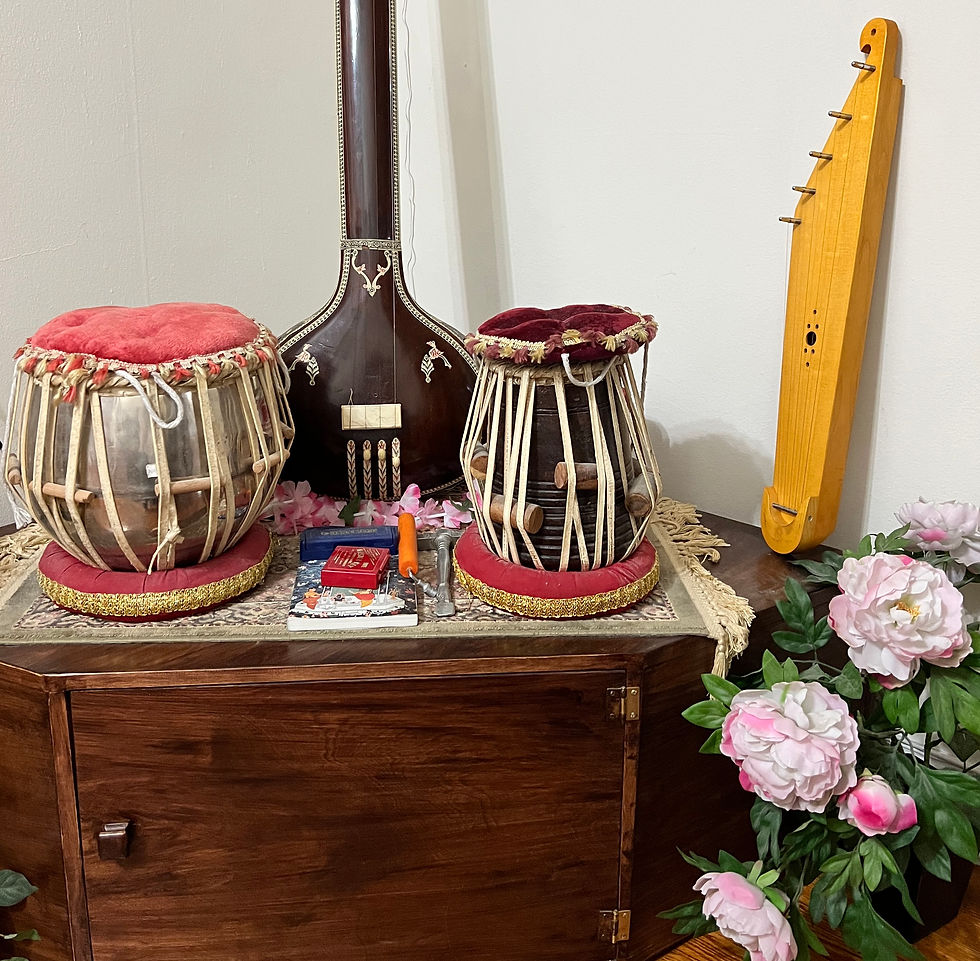
At the very core of my being is music. My love of dance and movement is because I can let the music course through me and express the soul of it through my body’s movement. My love of writing is, above all, my love of the sound, music, and rhythm of words.
Music was my mother. My own mother did not have any maternal instincts and was incapable of expressing love to her children. But music was her true love. She was a pianist who studied at several music conservatories in Europe during the 1930’s. She studied with Stravinsky in Sweden when he was there and followed him to Russia. But with the rise of Hitler, she became more and more involved in the fight for freedom, justice, and human rights. Though her potential career as a pianist was truncated by the War (as was true for so many of the talented youth of those days), her love of music stayed with her throughout her life.
I was boarded out when I was only a few months old so my mother could work in the war factory, 6 days a week, 12 hours a day. We didn’t have the normal mother-child bonding period. But we both were bonded to music, and that was our connection. My mother would put me in the playpen all day while she practiced and played the piano. It was through her music, which she loved, that I received love and joy. She often told me that even before I could walk, I would pull myself up and, holding onto the railing, would dance to the music she was playing.

My grandfather died when I was 4 years old. My mother left me with a close friend while she brought my younger brother with her to the funeral in Illinois. While I was staying with her friend, she took me to a performance of Swan Lake. I was told that people couldn’t believe how still and quiet I was while I sat through the performance. I remember being mesmerized and enthralled. Tchaikovsky’s music immediately went right to my soul, and the other-worldly ethereal magic of the dancers made me want to dance like them. To this day that particular piece of music arouses an instant, almost overwhelming urge to do the swan’s wings with my arms, regardless of where I am. I've learned to control that urge, but it’s still there decades later.
As a child and teenager, my mother took me to every event Sol Hurok presented in New York City, dance and music performances from different cultures from all over the world. Sometimes they were in theatres, sometimes they were in old loft spaces in lower Manhattan. Music and dance became deeply imprinted on my soul.
Music has also served as a kind of cerebral zip-file of memories from different periods in my life. In 1960 I spent the summer in Europe partly to attend a two-week international conference on “Where is Technology Leading Us?” Throughout that summer, traveling in trains, hitchhiking in cars, sitting in pubs and cafes, I heard Edith Piaf’s “Milord” playing everywhere. Even now when I hear a recording of her passionate, inimitable voice singing that song, it un-zips and opens up the cerebral memory files of that entire summer - sounds, sights, smells, places I’d been, people I’d met, conversations I’d had. All from that one song. I’m sure that I would be able to recall my entire life just by putting together a list of musical pieces and songs.
Music has pulled me through the most challenging times of my life. During the year of my separation and divorce, there were also five deaths, family members and people who had profoundly affected me and my life. I moved five times that year and lived in an SRO (single room only) and was homeless for three weeks. During that period music was essential to my survival, but it was Pandit Chaurasia’s flute music which helped me heal both my grief and the feeling of being perpetually in the middle of an earthquake with no solid ground to stand on. His long soft notes played so beautifully were transcendent and seemed to gently pull the pain right out of my heart.
I once told a friend that if I had to make a choice between being blind and being deaf, I would choose blindness, because it’s too hard for me to imagine a life without music. I’m now studying about Beethoven’s life and music. The creation of such great music and the fact of the composer never being able to hear his music performed, that is a profound human story. I want to try to understand how he navigated the pain and frustration of that.
No doubt, even If I did go deaf at some point, music would still be in my heart and mind. The music synapses would still be there. The ears wouldn’t hear any music, but the music would still reverberate through me. Rhythm, melody, harmony, different types of sounds- it would be different. But it would still be music.