Tashi Delek Magazine: The Most Beautiful Valley
- Sep 1, 2025
- 6 min read
Updated: Dec 11, 2025


In Shingkhar, Bhutan, there is a growing concern over the impact of tourism and modern values on the well-being of the village. Shingkhar is a pastoral yak-herding village (about 250 people in 30 homes) situated at 11,000 feet in a beautiful idyllic valley in eastern Bumthang. My assignment was to help assess potential eco-tourist projects which could benefit the village.
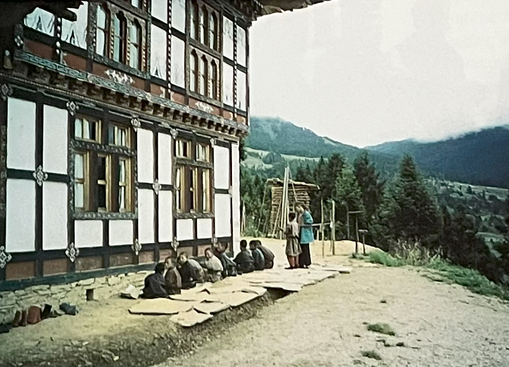
I stayed in Shingkhar for three weeks, before and during their Annual Puja. Every morning I was woken by the chanting of the student monks as they marched up the steep hill and past my window. Though it was cold, they were thinly dressed and most of them went barefooted or wore plastic boots with holes worn in them. There was no classroom for them, so they had to sit on the ground all day, rain or shine, under the eaves of the Guest House chanting the texts they had to memorize.


In the cool chill of the evening I sat in the dim solar-source light of the main room eating dinner and listening to different villagers tell their tales. Each night Dasho Shingkhar Lam would instruct Lhundup and Jamtso, who would soon be initiated as the new Chant Master and Dance Master respectively, high honours for such young gomchens. Dasho Lam would review wonder, humor and the daily concerns of the village.
One evening Lhundup was standing near the
bukari in his red monk’s robe with his head bowed listening intently to Dasho Lam who was talking him through the rituals he would have to perform.
“Las...las,” Lhundup whispered out of respect.
Meanwhile there was a slight commotion going on in the kitchen and the other student monks were giggling and jostling each other. Suddenly Lhundup bowed his head even lower in embarrassment and, laughing quietly to himself, ran into the kitchen.
“Pema,” Dasho Lam softly called out to Lhundup’s father, who apparently was the source of the commotion.


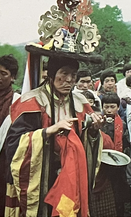


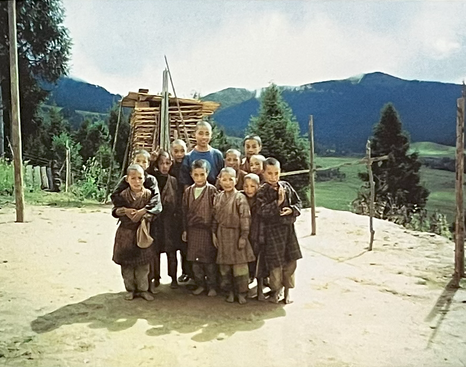

Top Left: New and retired Shingkhar Lams
Top Middle: Retired Shingkhar Lam in the Black Hat Dancer's attire
Top Right: Passing on the baton to the next generation. The new and retired Shingkhar Lams
Bottom Left: Jamtso (middle), the new Dance Master
Bottom Middle & Right: Lhundup, the new Chant Master with his pupil

Obviously curious, Dasho Lam again called to him in a low tone. Pema finally came out, sat down on the floor near the bukari and started over again with the story he was telling in the kitchen. The young gomchens crowded together in the kitchen doorway alert to every word Pema spoke. They laughed quietly to themselves until suddenly Dasho Lam burst out laughing with his eyes all lit up and throughout the rest of Pema’s story everyone was laughing with him. The story (later translated for me) was about the mishaps of the young assistant to a trance medium who never knew what was going to happen to him while his employer was in his altered state, the punchline being that working for a trance medium was a very dangerous job.
The villagers of Shingkhar love to talk, tell stories and tease each other. They get a sparkle in their eyes and their faces light up with mischief. They speak softly but clearly. When they are speaking of serious things their voices go lower. But even when the topic is serious business, there is usually laughter in the midst of it all. They smile without hesitation and have a grace and graciousness which benefits those meeting them with an open heart.

The experience with the villagers of Shingkhar is not unusual in Bhutan, but especially in the remote rural areas. Shingkhar has an added dimension, for it is also the site of one of the eight holy places associated with Longchenpa, the 14th century Lama who founded and gave teachings in the philosophy and practices of Dzogchen. Six and a half centuries later a sense of the sacred permeates Shingkhar in the midst of the harsh realities of its daily life and the delightful down-to-earth humor of its villagers.

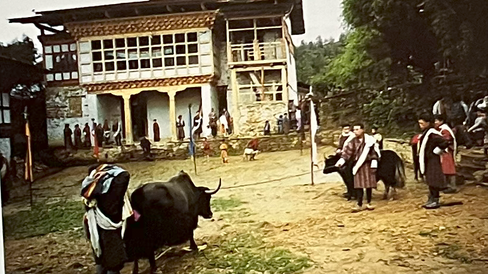


Animal blessing day – Dechenling temple in the background
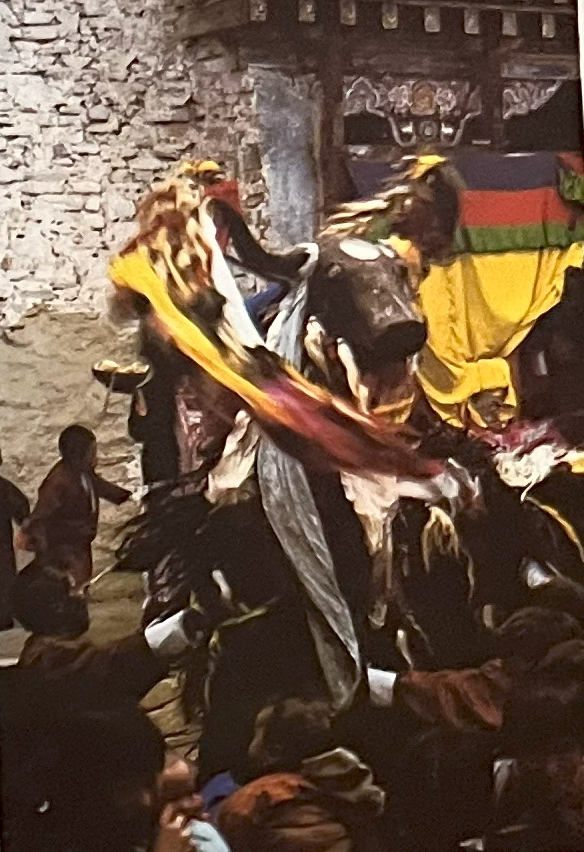
This is especially apparent during the Annual Tsechu. In the days preceding it there are non-stop preparations for the five-day puja, with all its sacred rituals, music and tantric dances which have been passed down from generation to generation. The puja is also filled with singing, dancing, comedy and a popcorn melee and a sacred and joyful yak dance performed by twelve to thirteen men moving together in rhythm under one large costume. One man in front moves the large yak head high, a whip bestowing blessing on those who are brave enough to run up with their backs turned to receive the blows.
In the weeks before, everyone is busy making tormas, fixing old masks for the tantric dance and making new ones. They practice the dances every day and sound of drums, cymbals, chanting and singing resound throughout the approaching days while ceremonies and rituals are being rehearsed. Dasho Lam is very serious about the preservation of the rituals and traditions he knows so well, spends his days with Lhundup and Jamtso. He goes over all the details with them for they will be the ones responsible for passing the rituals on to the next generations. The money spent to send Lhundup and Jamtso to Jangsa Gompa Monastery in Kalimpong India, which belongs to the Royal Government of Bhutan, brings double value to the village, first in revitalizing the institution of gomchens and second in creating a much-needed role model for the young people of the village. This is needed after the fiasco of the donor-country aided forestry project.



The forestry project offered exceptionally high wages for the villagers, lured them away from tending to their herds and crops, and instilled in them the desire for quick and easy money. Then the project was suddenly abandoned, leaving the villagers with no source of income and nothing but their neglected farms to live on. After their experience earning so much money, farming and herding no longer seemed honorable or respectable. In addition, after hearing tales of life in the city from young villagers who were sent away for their education, the young people were losing faith in their tradition and the value of village life. The uneducated were especially dissatisfied and restless and would either just live aimless lives or get themselves into serious trouble. The values of the modern world had clearly impacted Shingkhar.
With the economic shift from trading goods to using the monetary system, Shingkhar must find other ways to create income in order to survive and to discourage the increasing abandoning of village life. Tourism is one possibility which brings with it many problems. If they promote tourism, in the same way it has already been promoted for another famous temple nearby, they could end up destroying the very place and tradition they are trying to preserve. How do we go about creating such projects benefiting from but also appreciating and not destroying them in the process? Is there a constructive way to share the benefits to the source (to the village and villagers of Shingkhar)?

These are questions that deeply concern Masagang Tours and Travel, an agency dedicated to the preservation of the environment and traditions in Bhutan and to the economic and ecological well-being of Shingkhar. They have built a Guest House in the traditional Bhutanese manner and offer Bhutanese amenities, such as an herbal stone bath (which I can vouch is a heavenly experience). They are purposely limiting the number of tourists who can come to the annual puja, and they take care to educate the prospective tourists both in the ecology and the traditions of Shingkhar.


This tour agency is now looking into the potential benefits of eco-tourist projects in research and education. Tourists can come and help teach English, mathematics or science to the young gomchens. Researchers and consultants in the environmental and agricultural sciences can come for work/study programs (such as helping the villagers set up a cooperative farming system), and artists and craftspersons can come to study the village arts. They would also encourage the development of village crafts, taught and quality-controlled by the gomchens, and to be sold for the benefit of the villagers and in support of the institution of gomchens.
This tour agency is trying to find a balance that is beneficial for the village, working always with the awareness that it is the villagers themselves who must determine their own future.
Prayers and Tashi Delek to Shingkhar.